
Is EU Regulation All Greek to You? 🤔
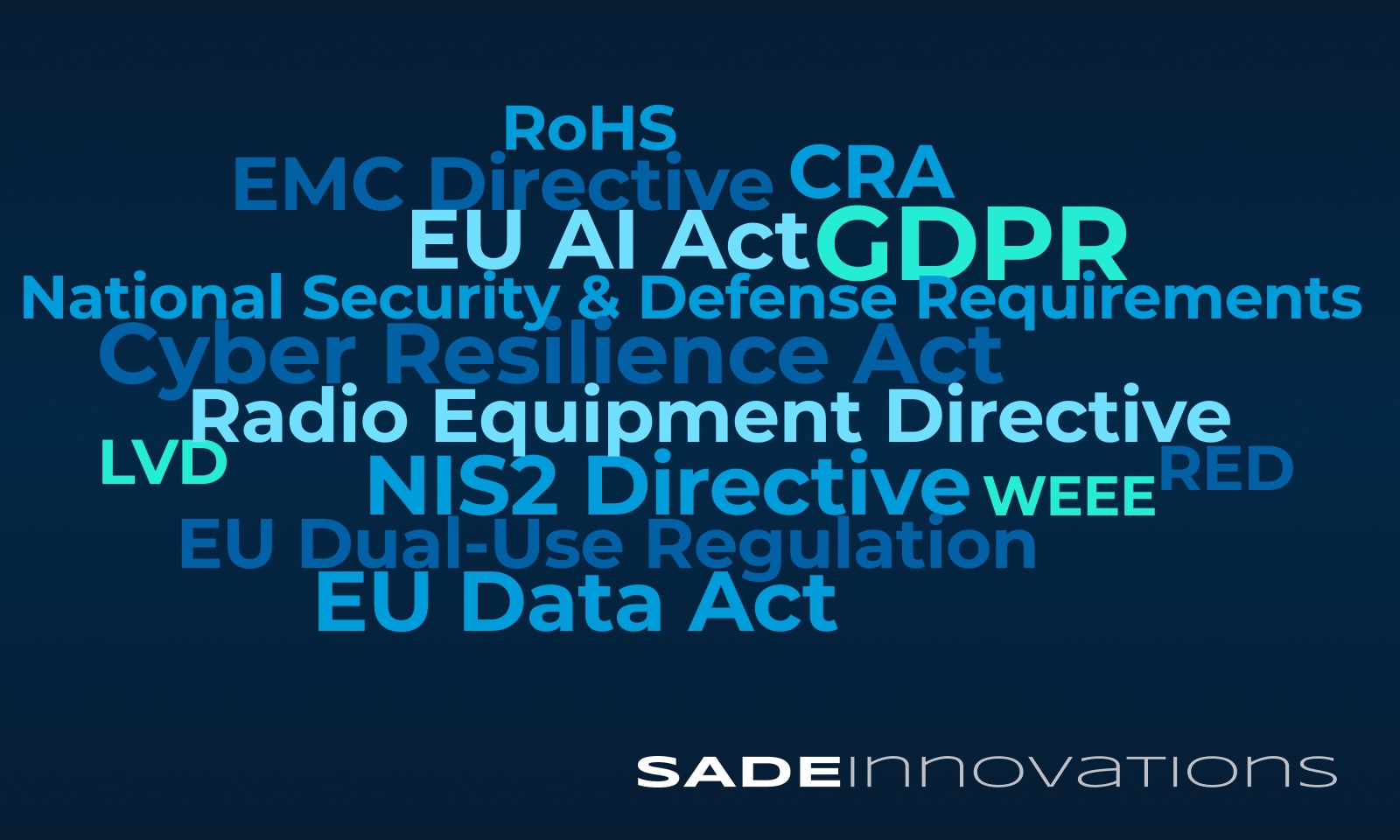
Do these sound like Greek to you: Cyber Resilience Act (CRA), NIS2 Directive, Radio Equipment Directive (RED), EU Data Act, GDPR, EU AI Act, EU Dual-Use Regulation, LVD, EMC Directive, RoHS, WEEE, and national security and defense requirements?
For many, they do. And understandably so.
EU technology regulations are evolving rapidly – especially when it comes to cybersecurity, AI, data, and connected devices. Building technology that works is no longer enough. It also needs to comply with applicable regulations.
At SADE Innovations, we work at the intersection of software and hardware. That's why regulatory compliance isn't just a box to check at the end of a project. It's part of the design process from the very beginning.
Already during development, we ask questions like:
• Will the solution process personal data?
• Which markets will the product be sold in?
• Does the solution involve AI?
• Does the customer operate in a critical sector?
• Will the product be exported outside the EU?
We operate within the EU regulatory framework and address cybersecurity, data protection, and product safety requirements on a project-by-project basis. We design our solutions with security and compliance by design in mind.
A concrete example is our own SADE Booster IoT Asset, which we're developing with the requirements of the Cyber Resilience Act (CRA) in mind. Booster gives our customers a ready-made foundation for developing IoT solutions – and a significant head start in addressing CRA requirements compared to building everything from scratch.
But we're not claiming to know it all. EU regulations are evolving quickly, and legislation such as the Cyber Resilience Act (CRA), AI Act, and Data Act is already reshaping the technology landscape. The CRA's first reporting obligations took effect on September 11, 2026, and most of its requirements will apply starting December 11, 2027.
That's why having a clear process matters more than memorizing every regulation:
We identify applicable requirements → We clarify uncertainties → We document decisions → We update our practices as needed.
We also have a designated Compliance Lead, responsible for keeping up with regulatory developments and changes, and serving as a go-to person for our project teams whenever questions arise.
So, EU regulations aren't all Greek to us! 😁 And we don't see compliance as a separate exercise, but as an integral part of quality development work. That allows us to focus on why we're here in the first place: building what helps our customers succeed and delivering what truly matters to their business. Real customer value.
P.S.In our upcoming blog posts, we'll take a closer look at these regulations and what they mean in practice. We'll start with the Cyber Resilience Act (CRA) – what does it mean for IoT and software development, and how can you prepare for it? Stay tuned.